Poste à combler : Conseiller(e) aux ventes
Vous êtes un passionné(e) d’aquariophilie à la recherche d’un emploi offrant flexibilité d’horaire et salaire compétitif? Faites-nous parvenir votre CV!
À propos
Aquarius est toujours a l'affut de nouvelles candidatures comme conseiller(e)s à temps plein ou partiel pour combler son équipe. En tant que conseiller en aquariophilie, vous serez quotidiennement amené à utiliser vos connaissances dans le domaine afin de répondre aux diverses demandes des clients et participer au développement de l’aquariophilie au Québec.
Principales tâches
Ce que nous offrons
Profil recherché
Veuillez faire parvenir votre CV à l’adresse courriel suivante : [email protected]
PROMOTIONS
NEW ARRIVALS
See the complete list of our latest arrivals
Search by keywords
Search by fish families
Search by plants types
Basic information for your logbook
Testing: They are to be done at least once a week during the first six weeks of your aquarium. Subsequently, as needed or when you have any doubts about the health of your aquarium. As the popular saying goes, “prevention is better than cure.”
Ammonia and Nitrite: They are two main toxic elements to watch out for. If they are too high, you must avoid adding new fish, ensure that the water is well oxygenated, avoid cleaning your filter and overdoing it with food.
pH: pH is generally alkaline at the start and tends to acidify over time. For some fish the PH plays an important role. If you are having trouble stabilizing your PH, you should do your hardness tests.
General and carbonate hardness (GH and KH): These parameters are closely related to the pH. Water that is too soft or too hard can affect fish that are more sensitive to water parameters. Most fish can adapt to the GH and KH levels of your water. However, from one municipality to another, there may be significant differences. You will therefore have to make the necessary adjustments by asking your advisor for the appropriate products.
Products to introduce: By indicating the date and the quantity introduced, you will be more disciplined and you will not be able to make mistakes! Hagen's Cycle product is one of the most successful products for colonizing your aquarium with millions of nitrifying bacteria. These bacteria are to be introduced weekly during the first six weeks of your aquarium. If you have natural plants (which we strongly recommend). Add iron-based fertilizer weekly. Which will give you better growth and foliage with more intense colors.
Aquarium maintenance: It is best to wait until your aquarium has gone through the critical first six weeks before performing a water change or cleaning your filter. Afterwards, you can clean your filter completely if you immediately add a dose of concentrated bacteria and especially if you do not clean your gravel and do not make water changes within two weeks. The frequency of cleaning your filter depends on several factors including the type of filter, the volume of the aquarium, the number and size of your fish, your feeding habits, the water changes made, if you have any natural plants or not… etc. In general, it is necessary to change filter materials at a regular frequency of 3 to 8 weeks.
Additional interventions and observations: Enter all relevant information to remember. For example, the introduction of products to treat your water or your fish. A change of a neon tube (ideally to be changed every year if you have plants), an algae problem has just arisen, cloudy water or any anomalies to be corrected. You can also simply mention that everything is fine!
Chose an aquarium as big as possible. A larger aquarium means a more stable environment, easier care and more choices for the decoration and inhabitants. Moreover, your fish will live together better in a bigger space.
Having a smaller aquarium means no or very little biological balance and a very unstable temperature. This means that a little too much food or a dirty filter and boom, you've lost control! You end up with unclear, smelly water!
Before filling the aquarium, use a slightly damped cloth to clean and remove dust. Never use cleaning products as they could be deadly to your fish
Avoid placing the aquarium near a window where it would be hit by the sunrays. The sun would generate an algae growth that will quickly become out of control. Instead, place the aquarium in a room with dimmed light, putting the emphasis on the aquarium
Be sure your aquarium is well leveled before you fill it with water. Badly leveled aquariums tend to have a shorter lifespan.
Before putting any fish in the aquarium, make sure the filter(s) work properly and the water has reached its stable temperature of 24-26 C (78-79 F).
Start with only a few fish and progressively add, over a few weeks, new species. Ask the specialists at Aquarius about which species should go in first and last.
You should, during the 6 first weeks, be thorough into making ammonia and nitrite tests. When these show high levels, be careful when adding new fish, and verify that filtration devices work properly. Testing the water frequently shows you minor problems before they become major, therefore avoiding catastrophic situations.
You should add concentrated bacteria (Cycle product) to your aquarium to help build up the bacterial activity necessary for healthy life. This type of bacterial like neutralizes toxic ammonia and nitrite. This is especially true during the first six weeks, where you should add the product once a week.
Natural plants provide your fish with a securing environment and contribute to the biological balance in your aquarium (plants absorb the deadly carbon dioxide and convert to oxygen). Aquatic plants will quickly transform your aquarium into a water garden, a lovely hobby accessible 12 months a year!
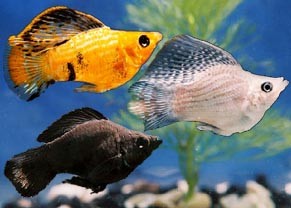
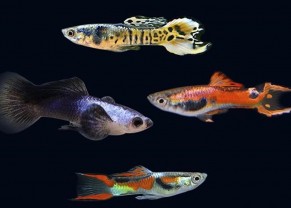
Avoid choosing territorial or aggressive fish, unless of course you wish to have WWF fights in your aquarium! Therefore, we recommend that you add smaller fish that swim in school (like tetras and/or rasboras), viviparous fish (mollies, platies, guppies, etc) or gouramis and angel fish.
You should ideally buy fish that are quarantined before being sold. Most fish go through various shocks during their shipping from their natural environment to foreign countries and they need some isolation to gain back that great shape. A quarantine environment allows the stores to treat sick or weakened fish and to keep an overstock. A store that has quarantine aquariums usually offers a better variety of healthier fish.
Fish health
When you feed your fish, it's the perfect time to take a few moments to check on their health. Normally, fish are very active and usually swim to the front of the aquarium when feeding. They know it's meal time and show it to you with their enthusiasm! A sick fish will behave differently and may display different symptoms such as: rapid breathing, slow swimming and retreating from the group, stuck fins, dull or dark colors, white spots or fungus growth. If you see the symptoms early on, your chances are obviously better of successfully treating your fish. We therefore give you a small basis to recognize the most common diseases. We invite you to consult us on our website so that we can determine the appropriate treatment.
Reduce stressors = reduce disease possibilities: Often the first cause of disease is stress. It is always easier to prevent a disease than to cure it. Here is a short list of things to check to minimize the risk of disease.
Stressors can be:
Absent or too rapid acclimatization to the introduction of fish
Filtration not adapted or poorly maintained
Poor, too rich or unsuitable food
Aggressive fish, not compatible,...
Ammonia, nitrite and nitrate poisoning
Temperature too high or too low
Aquarium too small or overcrowded
Toxic materials in the tank (water not treated with an anti-chlorine, residues of toxic products, soap)
The environment (noise, passage, vibration, polluted air, etc.)
Periodically, you can fill in the logbook in the "TIPS AND TRICKS" section which will allow you to have a follow-up of your aquarium and tell us the history of the aquarium in the event of a possible problem.
The most common diseases
Ich (Ick, white spot disease)
Symptoms: Appearance of small white dots (size of a grain of salt) on the fins then on the body and the gills. The fish has tight fins, rubs against the ground, plants or decorative elements. At an advanced stage, the fish lose weight and become inactive. When its gills are affected, its breathing rate increases.
Reasons: This disease is caused by a parasite (ichthyophtirius multifilis) and can appear when the fish undergoes stress that weakens its immune system. Most often it is a sudden change in temperature that is the cause. Otherwise, you can refer to the stressors mentioned above.
Possible treatments: Effective treatment of this disease requires knowledge of the life cycle of the parasite, which takes place in 3 stages:
Growth stage: the parasite attaches itself to the body of the fish by burrowing and feeding on its flesh.
The exit stage of spores: once developed, the parasite detaches from the fish, falls to the ground, forms a membrane around itself and divides. It is at this stage alone that we can fight against him. It is therefore important to treat the whole tank and not the fish alone.
The stage of infection: After a few hours, the membrane releases hundreds of new parasites in search of a host and begins their cycle again. In this state, the parasite dies in 70 hours if it has not found a host.
(See detailed instructions on bottles) Super Ick Cure: Every 2 days, 2 treatments. 1 teaspoon per 5 gallons. 25% water change after 4 days. Aquarisol: Every day for 48 hours. 12 drops per 10 gallons. Ich-X: Daily, for up to 8 days: 1 teaspoon per 10 gallons. 1/3 water change before each treatment.
REMINDER for treatments: It is best to remove carbon and/or chemical filtration from your filter for the duration of the treatment. Once it is finished, change 1/3 of the water and place a new charcoal for at least 1 week in your filter. Throw it away after this use. Fungus (Mycosis or mushrooms, Saprolegniosis, Columnaris)
Symptoms: Parts of the body covered by a deposit resembling a cotton ball. Can develop on the skin, gills, mouth, fins and eyes.
Reasons: Microscopic fungi that grow on weakened fish or lesions.
Possible treatments: Pimafix Natural treatment, safe for plants and filter bacteria. 1 teaspoon per 10 gallons for 7 days. Change of 1/4 of the water every 3 days. Repeat the treatment if necessary. Maracyn Antibiotic (kills bacteria from the filter). 1 tablet per 10 gallons, for 5 days, even if signs of illness have disappeared before. Only 1 treatment should be necessary.
Bacterial infection Symptoms: Discoloration of skin or fins, wounds, fin rot, bleeding.
Reasons: Various bacterias Possible treatments: Matracyn II Bifuran+
Aquarium lighting
How many hours per day?
The recommended lighting time is 6 to 8 hours per day. We recommend using a timer to avoid fluctuations. In order not to stress the fish, it would be better to turn on the aquarium when there is already light in the room. Usually, the timer turns the aquarium on around noon and turns off around 10 p.m. It will be up to you to assess the optimal lighting duration for your aquarium by observing the growth of your plants. Lighting too long in a lightly planted aquarium, or an aquarium receiving direct sunlight could cause unwanted algae problems. About plants: The more an aquarium is planted, the less green algae you will have. Plants compete with algae for the levels of nutrients absorbed.
Which lighting system to choose?
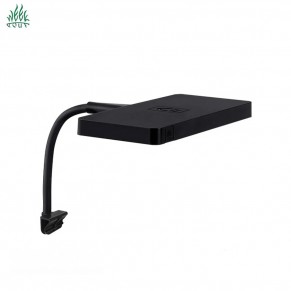
Compact fluorescent bulbs. (AA) Also suitable for small aquariums, they give a very diffused light and a little more suitable for plants. Its main attraction is the fact that they consume less electricity for lighting as powerful as several regular bulbs. They adapt to incandescent systems and they also produce less heat.
Compact fluorescent tubes. (AA) Same properties as light bulbs, but available in several sizes and therefore suitable for larger aquariums. They have a very long lifespan, up to 4 times that of standard neon.
T-8 fluorescent tubes. (Glo-mat from Hagen) They are available in many sizes and different designs. These neons are available in all sizes and can be used with an electronic ballast and rubber tips that can be fixed in a wooden cover.
T-5 fluorescent tubes (Coralife) (sometimes called HE for High Efficiency). A new generation of neon. Smaller in diameter, consumes less electricity (up to 40% less than regular lighting), while illuminating the same or more. Fluorescent tubes T-5 HO (Hagen) (High Output or optimized luminous flux) The latest generation which offers better performance while offering a longer life (up to 50% longer than a T-8 ). Unlike T-8 neon, it retains its efficiency (very low losses) throughout its lifespan.
"Moonlight" lights. These are small blue light-emitting diodes, simulating moonlight in the aquarium. There are also several models and different colors to provide night lighting that does not disturb daytime fish and allows fish that are more active at night to have a minimum of light.
Incandescent bulbs. The most economical to buy, but the quality of this type of lighting is very low. It is suitable for small aquariums and not really suitable for growing plants. These bulbs produce a lot of heat disturbing the stability of the tray. Lighting systems sold in hardware or decoration stores.
There are different fluorescent or halogen bulb lighting systems that can be used for the aquarium. These systems can have the appeal of being inexpensive. On the other hand, they do not provide lighting adapted to the needs of plants in terms of the light spectrum and do not always enhance the color of fish. Plus, they can encourage the growth of unwanted algae. They are therefore not recommended.
Kelvin, Lumen, Watt, Lux… A little light on these values!
Kelvin
The color temperature that corresponds to the hue of the color. Low temperatures have a reddish tint, and high ones have a bluish tint. The equivalent of sunlight would have the average temperature of 5000 K
Lumen
The measurement of the quantity of light, the luminous flux visible to the human eye. The bigger it is, the more intense the light appears to us.
Watt
Electrical measurement of power. It does not always correspond to the light output visible to the eye. For example, a 1 watt light bulb is approximately 7 lumens while a 1 watt neon tube is approximately 60 lumens.
Lux
It is a unit of measurement of luminous intensity relative to an area of one m² of surface. In an aquarium, the measure allowing good plant growth would be 250 to 1800 lux depending on the species planted.
Summer is coming and hot temperatures are already here!
Tropical fish can resist high temperatures, but variations must be progressive. To avoid seeing your aquarium transformed into « fish soup », several techniques can be used:
Try to avoid important or quick temperature variations: it causes stress that weakens the fish and makes them more vulnerable to illness.
514-721-1949
2347, Jean-Talon est,
Montreal, QC, H2E 1V8
| Monday | Closed |
| Tuesday | 10 am to 6 pm |
| Mercredi | 10 am to 6 pm |
| Thursday | 10 am to 7 pm |
| Friday | 10 am to 7 pm |
| Saturday | 10 am to 5 pm |
| Sunday | 10 am to 5 pm |